Role: UX Researcher, UI/UX Designer Duration: 10 weeks (Spring 2025) Team: May Phan, Tiffany (Yen-shi) Chen, Riley Nicholson, Z (Zhiyu) Ren Project Sponsor: Major U.S. Airline (Code-named Snowflake) *Snowflake is not a real airline company. This branding has been created to keep our project sponsor confidential.
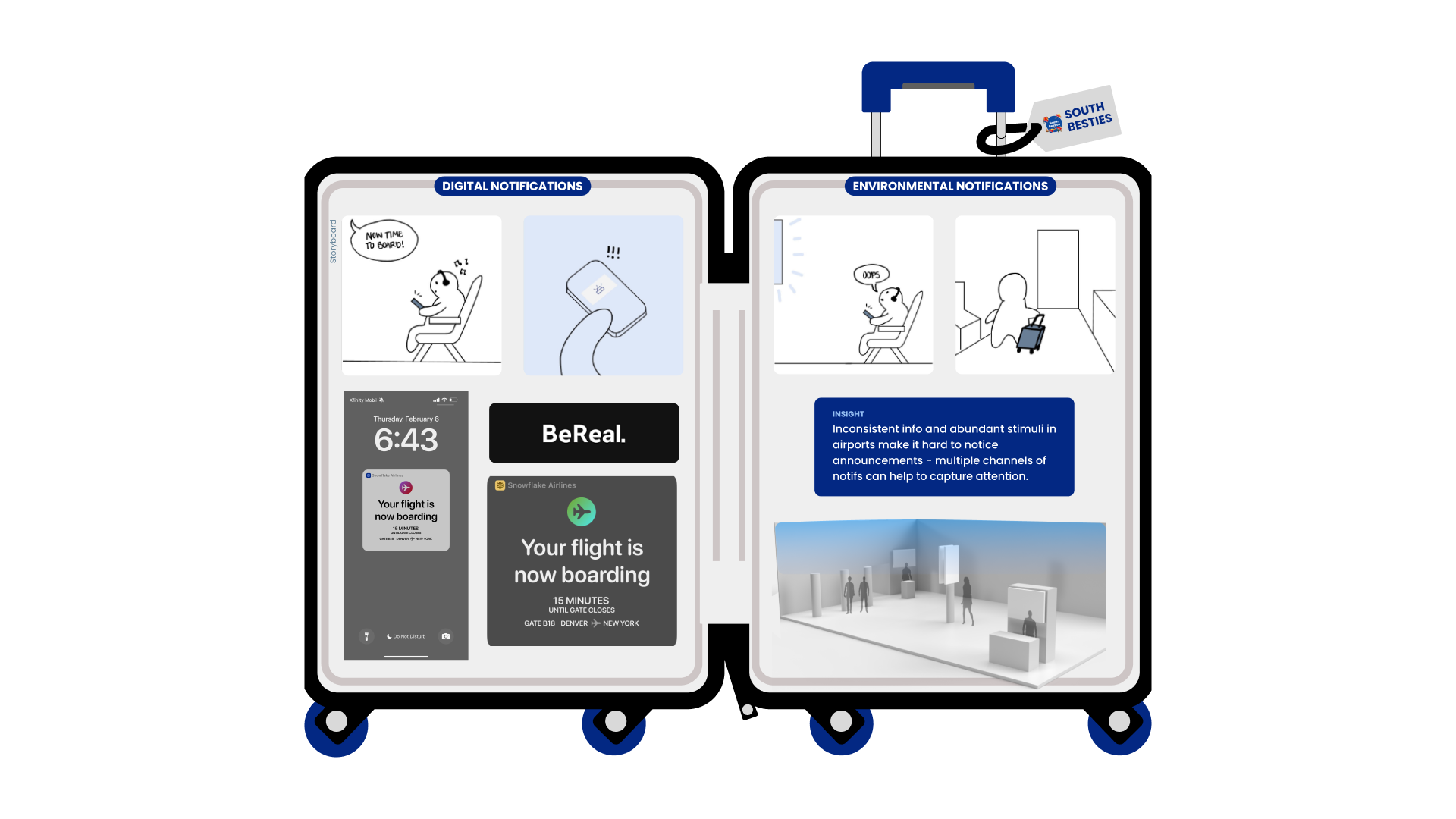
Snowflake Airlines (code name) asked us to improve how travelers recover from disrupted flights (aka irregular operations, or IROPs). With planned cuts to customer service staffing, they needed a solution that could help reduce agent workload during disruptions without having a big impact on the traveler experience. Our team proposed a set of app features including group ticket linking, multi-channel rebooking notifications, and small interaction improvements to make recovery smoother for travelers and staff.
My role: Co-led digital prototyping and final presentation with equal contributions to UX research, synthesis, and business strategy.
Problem + Outcomes
How can we help make rebookings as simple as possible?
Problem: When travelers book flights separately (often the case with group travel), they end up on separate reservations with no way to link them after the fact. During a disruption, this means everyone has to rebook individually, creating confusion for travelers and duplicate work for customer service agents fielding the same questions from the same group.
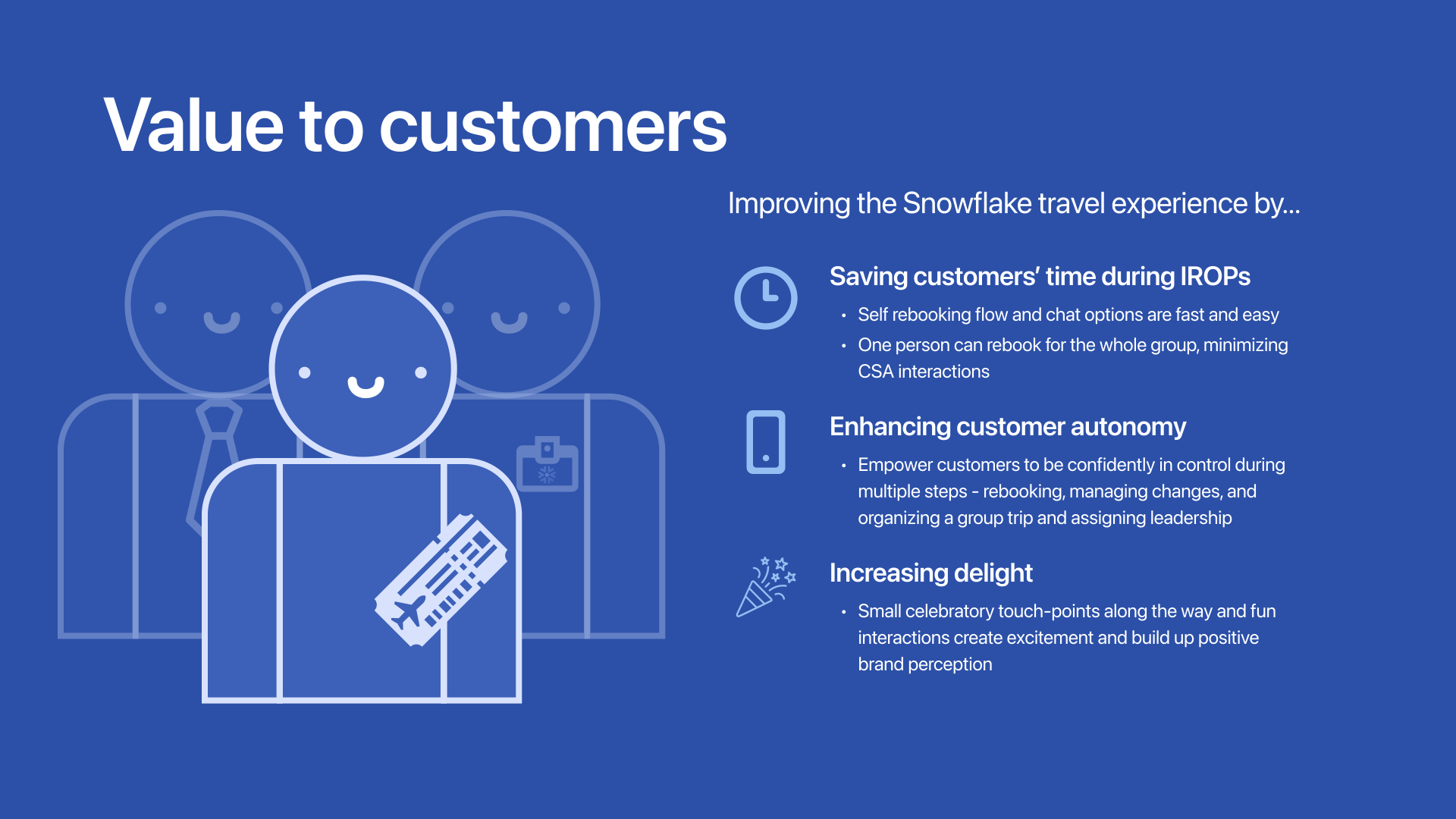
Outcomes: We aimed to improve the passenger experience while saving time and costs for the airline. Our solution focused on group ticket linking for faster rebookings, real-time multi-channel updates to reduce confusion, and small design touches to help passengers feel supported during stressful disruptions. To get there, we conducted over 12 interviews with agents and travelers, prototyped 120+ screens, and ran two rounds of usability testing with 8+ participants across three iterations.
Initial UX Research
Finding specific pain points for customer service agents and customers when delays happen.
Primary Research: Our class traveled to Midway Airport in Chicago for an afternoon to interview traveling customers and service agents after conducting secondary research. Key insights included:
Initial Brainstorm, Insights, and Midterm: After synthesizing our research, we brainstormed 4 ideas surrounding our insights and presented to the Snowflake team at midterm. We received positive feedback on the ticket-linking idea, as well as on our experimental notifications idea.
Process Work
Brainstorming ways to streamline group travel, especially when delays happen.
Based on feedback from the midterm, we refined our focus:
How might we reduce the friction of group rebooking during flight disruptions for both travelers and the agents supporting them?
A competitive analysis showed that linking separately purchased tickets is a largely unsolved problem in the industry, which led us to make it our primary focus alongside bringing Snowflake's general rebooking experience up to par with competitors.
Over 10 weeks, we rapidly prototyped and tested flows centered on how travelers make decisions during delays, how to simplify group actions without compromising privacy, and how to design a mobile-first experience that helps people recover faster.
Personas to better frame our project.
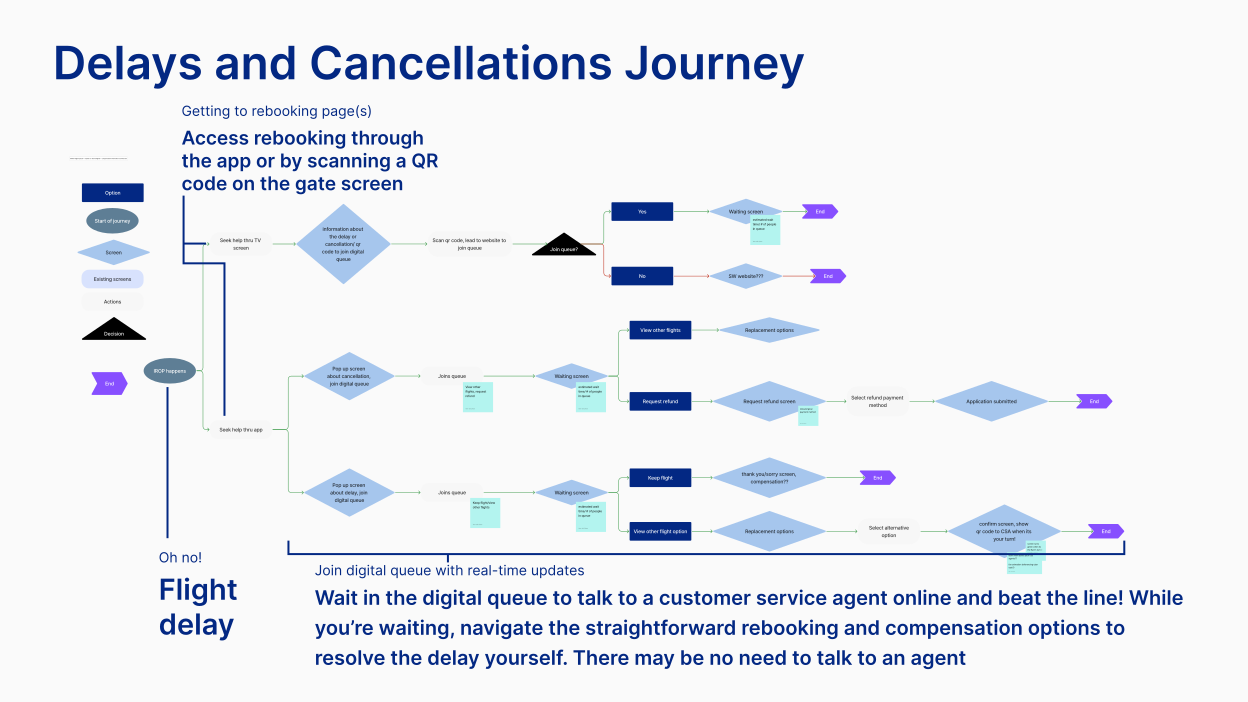
To help narrow down our many ideas, we created a few different user journey flows within the app to map out where our ideas would fit on our personas' journey - a girls' trip to Denver.
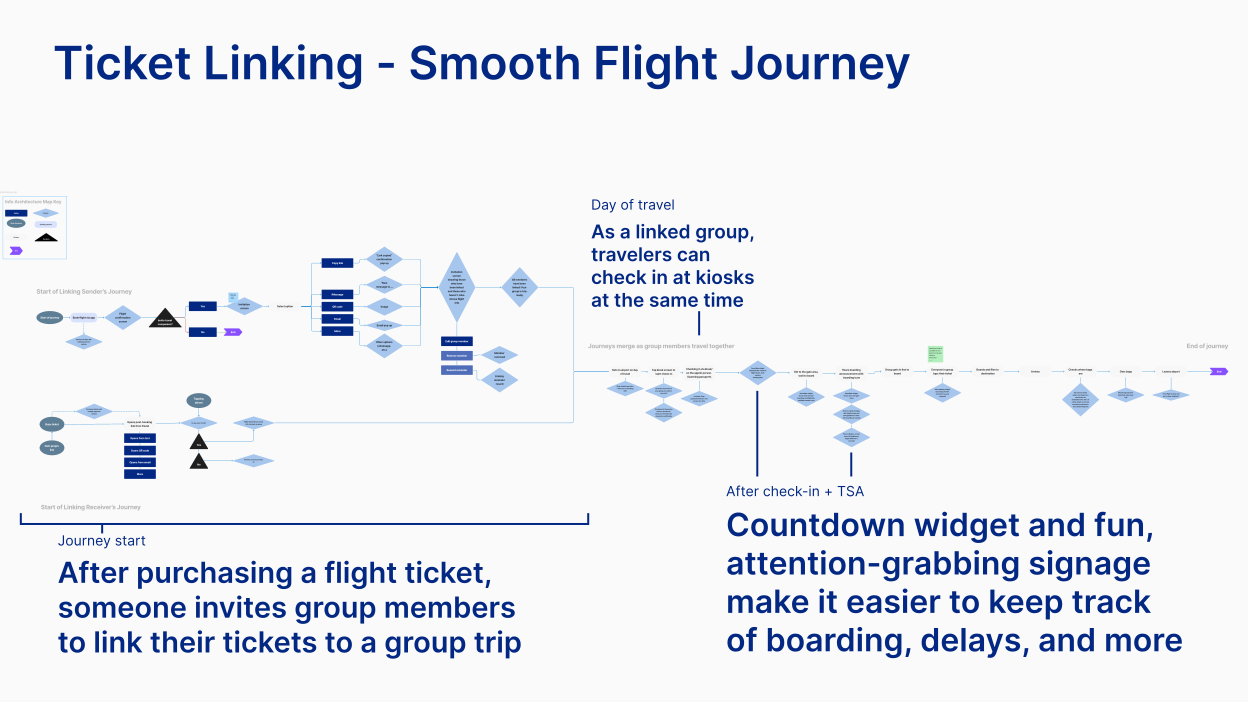
An information flow for our linking feature on a flight with no delays.
Design
Iterating to improve ease and clarity when rebooking.
We designed a group linking flow that lets travelers connect their tickets either at booking or after purchase, rebook the whole group in one action, and receive notifications tailored to each person's context and preferences.
This interaction was tested and iterated with users, focusing on clarity, trust, and low-friction recovery. Our process was accelerated by working within a client-provided design system.
2 rounds of usability testing with a total of 8 friends and family members who often traveled revealed gaps in our concepts.
Lack of Onboarding For a feature as unfamiliar to users as linking, many interviewees had questions about what it was for and how to use it. To better introduce linking, we added a short tutorial.
Wait - how do I choose my seats? Although picking your seat is essential to buying tickets and rebooking, it flew over our radar. We added these flows in to make the experience more cohesive.
Chatbots? No thanks Interviewees noted that self-selection was quicker for rebooking and disliked chatbots in general. We replaced the chatbot with the ability to talk to a CSA online.
The app looks kind of stale Interviewees felt the app lacked visual friendliness. We added in additional illustrations to help flyers get the "Snowflake" experience, even with less CSA interactions.
We iterated to ensure functionality, a guided user experience, and customer delight, better aligning with our design goals. Below are the main flows after iteration.
Onboarding to introduce linking to users.
Learnings + Next Steps
Learning to balance the big picture with the details.
Our research phase pushed us to dig deeper than expected. We started broad at the airport, then narrowed in on group travel as a consistent and underserved pain point. That focus ended up driving the most interesting parts of the project.
Working with a team of four people with genuinely different backgrounds was one of the best parts. One teammate's detail orientation pushed me to slow down and fix things I might have glossed over in the visual design and deck, giving the project a level of polish that felt different from some of my prior work. My tendency to think big picture helped us stay on track and not lose sight of deadlines or deliverables.
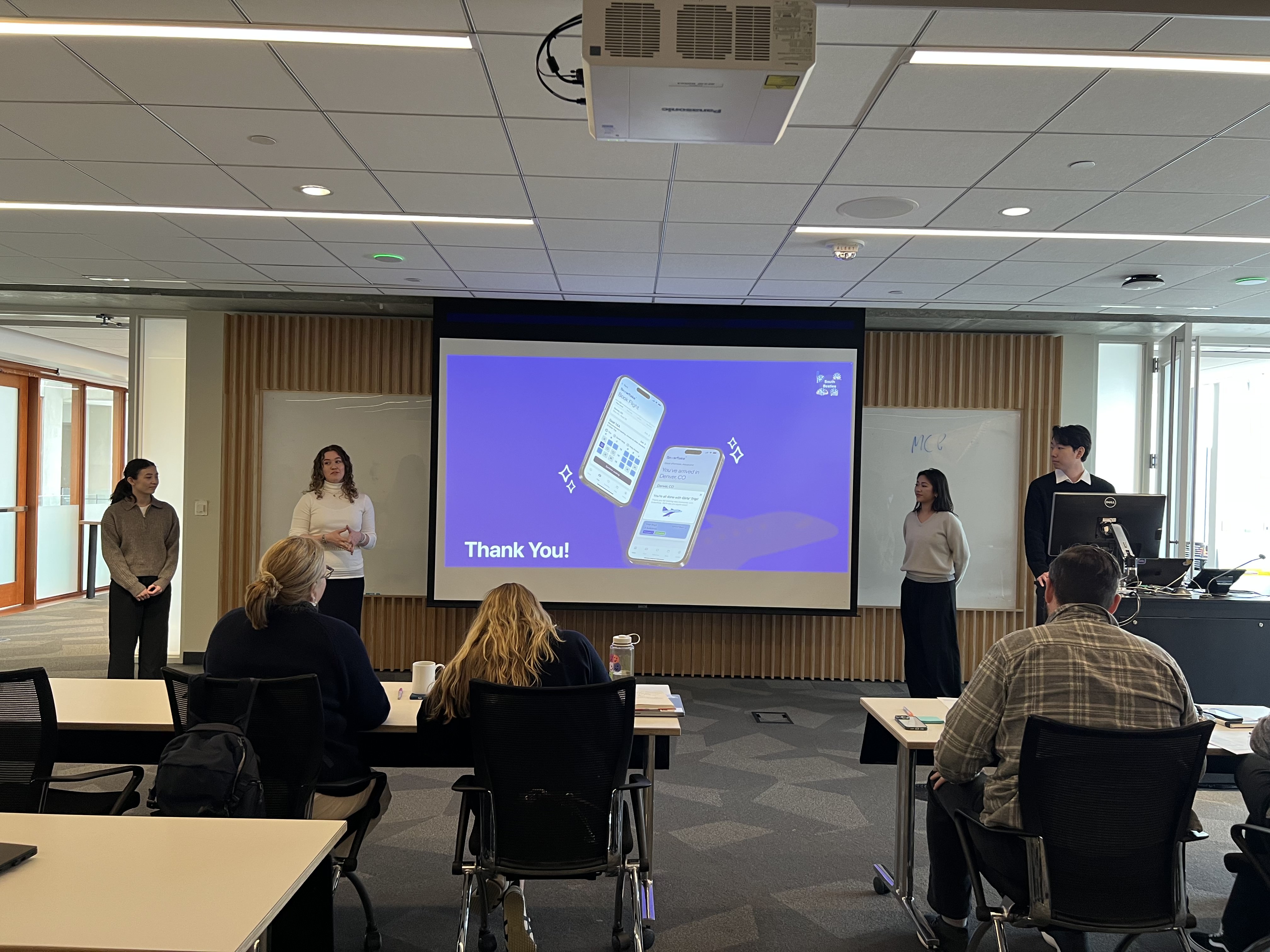
Framing our final presentation around a single persona story, a girls' trip to Denver, kept the concept grounded and easy to follow. Tying user needs to business value also strengthened our case, showing how group rebooking could reduce help desk traffic and support costs without compromising the traveler experience.
.svg)

.svg)
.svg)
.svg)
.png)


.svg)
.svg)


%20(1).gif)
%20(1).gif)
.gif)
.gif)
.gif)

.gif)
.gif)
.gif)